
The Strait of Hormuz is burning, and your Christmas inventory might be the first casualty. If you're planning Q3 shipments from China right now, you're already late—and the clock is ticking faster than you think.
In April 2026, escalating tensions at the Strait of Hormuz have triggered a global supply chain crisis. Rising oil prices, container shortages, and skyrocketing freight rates are now threatening your Q3 deliveries. If you're sourcing for the holiday season, you need to act now—delays are no longer a risk, they're a certainty.
We've been in the export business for over fifteen years, working with major retailers across 100+ countries. We've seen disruptions before—but this one is different. The ripple effects are hitting every link in the chain, from raw materials to final delivery. Let me walk you through what's happening and what you need to do.
What's happening at the Strait of Hormuz in April 2026?
The situation is tense, and it's getting worse. Military activities have intensified around the strait, creating uncertainty for every vessel passing through.
The Strait of Hormuz, through which 30% of global seaborne oil passes, is now a high-risk zone. Shipping companies are rerouting, insurance premiums are surging, and transit times are stretching by weeks. This isn't just a Middle East problem—it's a global logistics crisis.
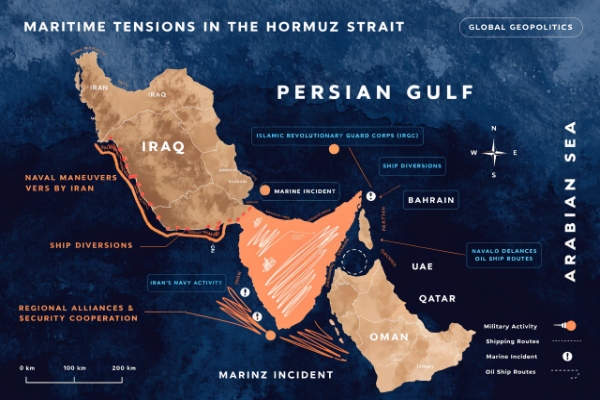
The strait is the world's most critical oil chokepoint. When tensions rise here, the effects spread instantly. Carriers are making tough choices: risk the strait, take longer routes, or wait it out in nearby ports. None of these options are good for your delivery schedule.
We're seeing shipping lines cancel direct transits and opt for longer routes around Africa. This adds 10-14 days to journey times. Some vessels are anchoring outside the strait, waiting for clearer signals. This creates a cascade effect—ships aren't where they need to be, schedules are breaking down, and reliability has vanished.
For buyers planning Q3 shipments, this means your traditional timelines are obsolete. A route that took 30 days now needs 45-60 days, and that's assuming no further disruptions. The uncertainty itself is the biggest problem. You can't plan around chaos.
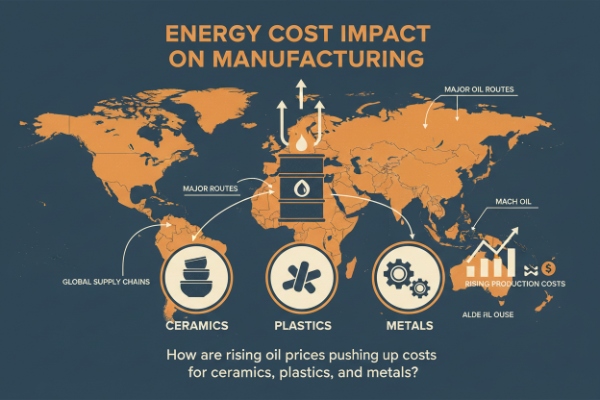
How are rising oil prices pushing up costs for ceramics, plastics, and metals?
Energy inflation is hitting manufacturing hard. When oil prices spike, production costs for your products spike too.
Ceramics need natural gas for firing, plastics are petroleum derivatives, and metal refining consumes massive electricity. The Hormuz crisis has driven energy costs up sharply, and these increases are now embedded in your product prices—sometimes by 15-25%.
Let me break down how this works in real terms. We supply homeware products—ceramics, plastics, silicone, stainless steel. Every one of these categories is energy-intensive.
Manufacturing Sector | Primary Energy Input | Cost Increase (April 2026) | Impact on FOB Price Ceramics | Natural gas (firing kilns) | +20-30% | +8-12% Plastics (PP/PS) | Petroleum derivatives | +18-25% | +10-15% Silicone products | Petroleum-based feedstock | +22-28% | +12-18% Stainless steel | Electricity (refining/forming) | +15-20% | +6-10%
When natural gas prices jump, ceramic factories face immediate pressure. Kilns run 24/7—you can't turn them off without damaging production. Higher energy costs get passed straight through.
Plastics are even more directly tied to oil. PP and PS resins are petroleum derivatives. When crude prices rise, resin costs follow within days. We've seen polypropylene prices increase by 18% since early April. That's not a gradual trend—it's a sharp shock.
Silicone products face double pressure. The base material comes from petroleum, and the curing process requires heat. Both inputs are now more expensive.
Stainless steel production needs enormous amounts of electricity for melting and forming. In regions where electricity comes from gas or oil, those costs are climbing fast.
This isn't a one-time adjustment. As long as Hormuz remains unstable, energy prices will stay volatile. Manufacturers can't absorb these costs indefinitely. They're passing them to suppliers like us, and we're having difficult conversations with buyers about revised pricing.
Why does a "distant war" mean fewer containers and higher freight rates at Ningbo and Shanghai ports?
It seems counterintuitive. The Strait of Hormuz is thousands of miles from Chinese ports. But global shipping is a closed loop—when one part breaks, everything suffers.
Hormuz tensions disrupt global container circulation. Ships avoid risky routes, empty containers get stranded overseas, and Asian ports face severe box shortages. Even if your route doesn't touch Hormuz, you'll face "cargo ready, no container" situations.
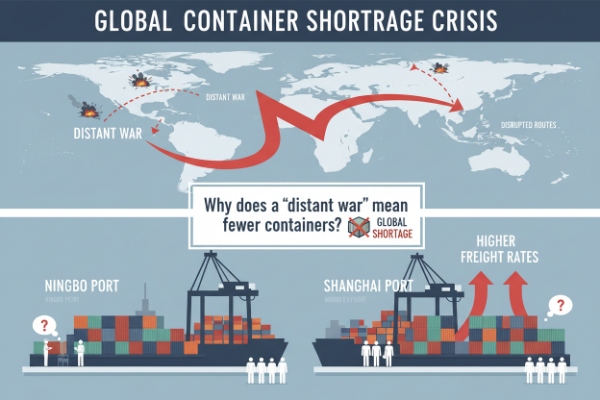
Here's what's happening behind the scenes. Global container shipping operates on a circulation system. Boxes move from Asia to Europe, get unloaded, then return empty to be refilled. This cycle depends on predictable vessel schedules.
When carriers reroute around Hormuz or delay sailings, empty containers don't return on schedule. They pile up in European and Middle Eastern ports, or they're floating on diverted ships heading the long way around Africa.
Meanwhile, at Ningbo and Shanghai—our main export hubs—factories are producing goods on schedule. But there aren't enough containers to load them. We're seeing 20-30% container shortages at peak times.
This affects everyone, not just Middle East routes. Because containers are pooled assets, a shortage in one region creates shortages everywhere. If 40% of boxes that should be in Shanghai are stuck in Rotterdam or Jebel Ali, every exporter at that port competes for the remaining 60%.
The result? Container rental prices surge. Carriers prioritize high-value cargo. Booking slots become uncertain. We've had confirmed bookings rolled to the next sailing three times in two weeks.
Even buyers shipping to North America or Australia—routes that don't go near Hormuz—are feeling this. The global container fleet isn't growing fast enough to compensate for circulation inefficiencies.
For buyers, this means you can't assume container availability anymore. You need to book space earlier, accept higher costs, and have backup plans. The days of last-minute bookings are over.
What's behind the "irrational" surge in ocean freight and surcharge explosion?
Freight rates have jumped beyond what normal supply and demand would predict. This isn't seasonal—it's geopolitical pricing.
War Risk Surcharge (WRS) has tripled for Middle East routes. Carriers are layering on Emergency Bunker Surcharge, Port Congestion Fees, and Equipment Imbalance Charges. Freight rates are now driven by political risk, not just capacity—and the increases are sudden and unpredictable.
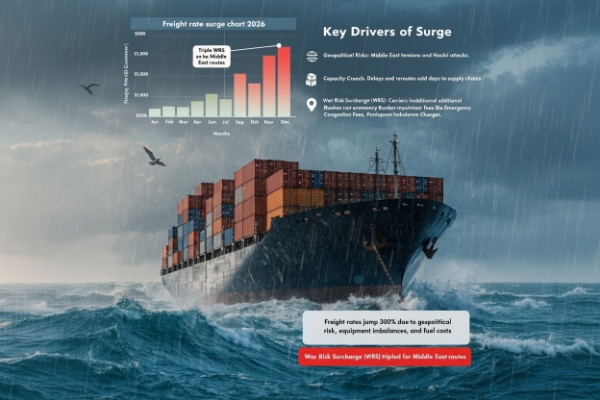
Let me show you what we're seeing in real numbers.
Surcharge Type | Pre-Crisis (Jan 2026) | Current (April 2026) | Increase War Risk Surcharge | $50/TEU | $180/TEU | +260% Emergency Bunker Surcharge | $200/TEU | $380/TEU | +90% Port Congestion Fee | $100/TEU | $220/TEU | +120% Equipment Imbalance Charge | $150/TEU | $280/TEU | +87% Total Additional Cost | $500/TEU | $1,060/TEU | +112%
These aren't negotiable. Insurance companies raised War Risk premiums first—they have no choice when vessels enter high-risk zones. Carriers immediately passed these costs to shippers.
Then came the cascade. Bunker fuel costs rose with oil prices. Port congestion developed as ships rerouted. Equipment imbalances appeared as containers got stuck in wrong locations.
The real problem is unpredictability. In normal times, freight rates follow seasonal patterns. We know Q3 rates rise as Christmas cargo moves. We can plan around that.
Now, rates jump 15-20% in a single week based on news from Hormuz. A quote valid on Monday is obsolete by Friday. This makes costing impossible and puts enormous pressure on margins.
For buyers with fixed retail prices, this is devastating. You can't suddenly raise your shelf price by 10% because freight doubled. The cost has to come from somewhere—usually supplier margins or reduced product quality.
We're having tough conversations with customers. Some are accepting higher prices. Others are postponing orders, hoping rates stabilize. Neither option is ideal.
For Christmas season buyers, why is the time alarm ringing now?
If you're planning Christmas inventory, you're already cutting it close. The buffer time is gone.
Q3 is peak shipping season for Christmas goods. Normal 30-45 day transit times now require 60+ days. Shipments planned for August-September arrival may not reach shelves until October or later, missing critical retail deadlines. You must plan 4-6 weeks earlier than previous years.
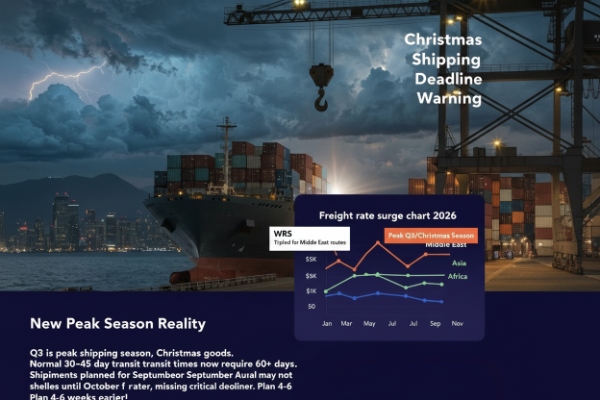
Christmas retail operates on strict deadlines. Major retailers set "shelf dates"—the day products must be in stores. Miss that date by even a week, and your entire shipment becomes worthless for that season.
Traditionally, Q3 shipments leaving China in early August arrive by mid-September, giving time for distribution and shelf placement by early October. That timeline is broken now.
With current disruptions, an early August shipment might arrive in late September or early October. After customs clearance and inland transport, you're looking at November shelf dates. That's too late for many Christmas categories.
We're advising customers to move their timelines forward by a full month. If you planned to ship in August, you should ship in July. If July was your deadline, you needed to ship in June—which means you're already late.
The zero-error margin reality is harsh. In stable years, you had flexibility. A week's delay was manageable. Now, there's no buffer. Every day counts.
We're seeing smart buyers do several things. First, they're splitting shipments—sending critical items by air if needed, even at 5-6x the cost. Second, they're ordering higher quantities of proven bestsellers and cutting experimental items. Third, they're communicating constantly with their logistics partners.
For discount retailers—we work with several major European hard discounters—the pressure is even more intense. Their business model depends on rock-bottom prices. They can't absorb big cost increases, and they can't afford stockouts during peak season.
We've proactively reached out to these customers. For orders not yet confirmed, we're recommending delays until the situation stabilizes. For urgent shipments, we're re-quoting with current prices and asking them to reconfirm with their freight forwarders.
It's not comfortable. Nobody wants to tell a customer their costs just increased by 20%. But it's better than shipping goods that arrive too late or at prices that destroy both our margins.
Why are stable supply channels and transparent communication more critical than ever during this crisis?
In chaos, reliability becomes the most valuable commodity. Your supplier's ability to navigate uncertainty matters more than their base price.
Unstable geopolitics has eliminated supply chain error margins. We're proactively contacting customers—especially price-sensitive European discount retailers—to discuss pricing volatility, postpone non-urgent orders, and provide alternative solutions for critical shipments. Transparent communication now is better than costly surprises later.
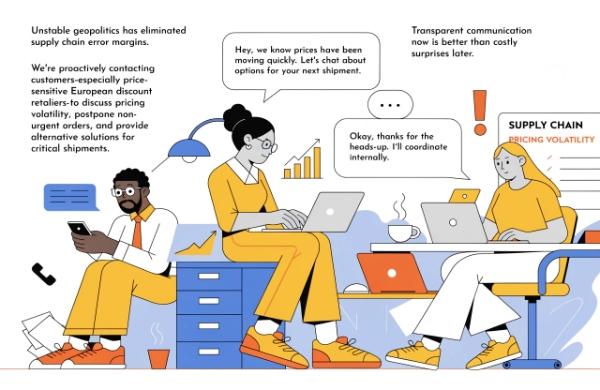
Let me share what we're doing differently right now. Our Middle East and European customers have started confirming delivery dates weeks earlier than usual. They're nervous, and rightfully so.
For our hard discount clients—where every cent matters—we've taken an unusual step. For products we quoted months ago that aren't yet ordered, we're calling customers directly. We're explaining that raw material and freight costs have changed significantly. We're asking if they want to postpone until stability returns.
This seems counterintuitive. Why would we suggest a customer delay an order? Because we've learned that hidden surprises destroy relationships. If we ship goods at old prices and then demand payment adjustments, trust evaporates. If we ship knowing the customer will lose money on their retail price, they won't come back.
Better to have an honest conversation now. Some customers choose to proceed—they need the inventory and accept the new costs. Others postpone—they'd rather wait than squeeze margins to zero.
For urgent shipments, we're doing full price re-validation. We check current raw material costs, re-quote with freight forwarders for latest ocean rates, and calculate new FOB prices. If the difference is substantial, we present alternatives: different materials, simplified designs, or adjusted specifications that preserve functionality at lower cost.
We've also built deeper communication channels with our factory partners. We need daily updates on raw material availability and pricing. We need to know immediately if production schedules slip. This information flows directly to customers.
The key insight is this: in stable times, you can operate transactionally. Place order, ship goods, send invoice. In crisis, you need partnership. You need suppliers who alert you to problems before they explode, who propose solutions rather than just delivering bad news, who understand that your success and their success are linked.
We're not perfect. We can't control oil prices or geopolitics. But we can control information flow. We can make sure you know what's happening, what it costs, and what your options are.
For buyers reading this, here's my advice: evaluate your suppliers not just on price, but on communication quality. Are they telling you about problems early? Are they proposing alternatives? Are they willing to have difficult conversations about costs and delays?
The supplier who gives you the lowest quote today but disappears when problems arise is worthless. The supplier who charges slightly more but keeps you informed, helps you plan, and solves problems alongside you—that's who you need right now.
Conclusion
The Hormuz crisis is reshaping global supply chains in real-time. Rising costs, container shortages, and transit delays are hitting Q3 shipments hard. For Christmas season success, act now—plan earlier, communicate constantly, and partner with suppliers who navigate chaos alongside you.


